
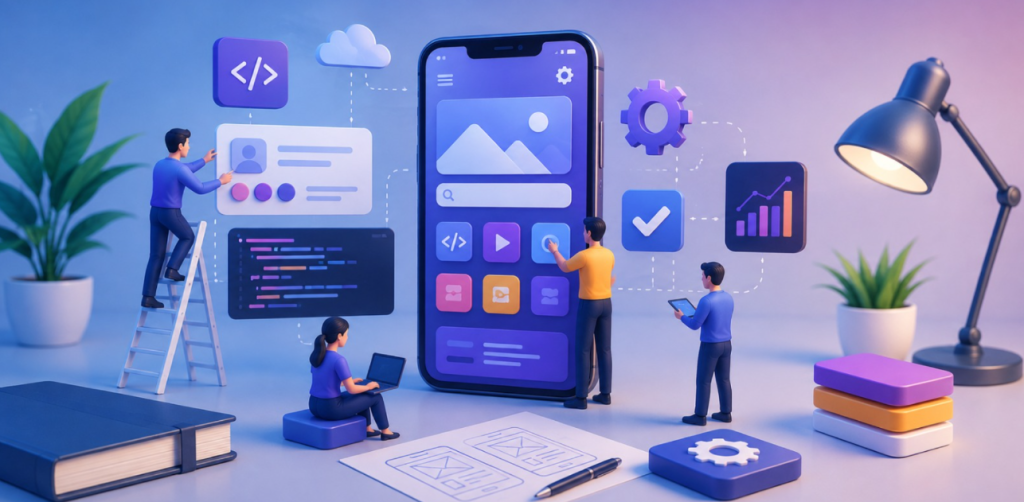
Every successful mobile application begins with an idea. It may be a solution to a customer problem, a new business concept, or a way to improve an existing service. However, turning an idea into a working application requires proper planning, technical knowledge, design, development, and testing. A professional App development company can help businesses move through each stage in an organized way.
Understanding the Business Idea
The first stage is understanding what the business wants to achieve with the application. Developers need information about the target audience, business model, services, competitors, and expected outcomes. This helps the development team understand the purpose of the app and create a solution that supports the actual business requirements rather than simply building a collection of features.
Defining the Target Audience
An application should be designed around the people who will use it. Their age group, technical knowledge, preferences, location, and expectations can influence the application’s design and functionality. Understanding the target audience at the beginning allows the development team to create a more relevant experience and avoid unnecessary features that may complicate the product.
Planning the Required Features
Once the idea and audience are clear, the next step is feature planning. Businesses may require features such as registration, profiles, product catalogs, search, booking, payments, chat, notifications, maps, reviews, or dashboards. Experienced Mobile app developers can help prioritize these features and determine which ones should be included in the initial version.
Creating a Project Roadmap
A clear roadmap gives the project direction. It can include development stages, major milestones, estimated timelines, testing phases, and launch requirements. A detailed roadmap also helps businesses understand how the project will progress and makes it easier to monitor development without losing focus on the original objectives.
Designing the User Experience
UI/UX design is an important part of the development process. Before writing the complete application code, designers can create screen layouts, navigation structures, visual elements, and user flows. The goal is to make the application simple, attractive, and easy to navigate. A good design can reduce confusion and encourage users to interact with the app.
Choosing the Right Technology
The technology used to build an application depends on its requirements. Developers may choose native technologies or cross-platform frameworks depending on the target platforms and desired functionality. The decision can also depend on performance, scalability, security, development time, and maintenance requirements. The technology should support both current needs and future growth.
Starting the Development Process
After planning and design approval, development begins. Developers build the frontend that users interact with and the backend responsible for data, business logic, authentication, and other services. Depending on the project, APIs, databases, cloud infrastructure, payment systems, and third-party services may also be integrated during this stage.
Building the Backend Infrastructure
The backend is responsible for many functions that users do not see directly. It can manage accounts, orders, products, messages, payments, notifications, and application data. A properly designed backend helps the application process information efficiently and provides a foundation that can support increasing numbers of users as the business grows.
Integrating Third-Party Services
Many applications depend on external services. These can include payment gateways, maps, SMS services, email platforms, analytics systems, social login, shipping services, or other business tools. Professional Mobile app developers can integrate these services while ensuring that information moves correctly between the application and external platforms.
Testing the Application
Testing is one of the most important stages before launch. Developers need to check whether features work as expected and identify bugs or performance issues. The application may be tested on different devices, screen sizes, operating systems, and network conditions. Testing helps reduce the possibility of users experiencing technical problems after launch.
Checking Security and Data Protection
Security testing should also be part of the development process. Applications may handle customer accounts, personal details, payment information, or business data. Appropriate security measures can help protect this information. Authentication, authorization, secure communication, and data protection should be considered according to the application’s specific requirements.
Improving Performance
An application that takes too long to load or frequently crashes can create a poor user experience. Performance optimization may involve improving code, reducing unnecessary resources, optimizing databases, compressing media, and improving server performance. Experienced developers can identify performance bottlenecks and make technical improvements before the application reaches users.
Preparing for App Store Launch
Once development and testing are complete, the application needs to be prepared for distribution. Depending on the target platforms, this can involve creating store listings, preparing screenshots and descriptions, configuring application details, and meeting platform requirements. A professional App development company can assist businesses throughout the deployment process.
Launching the First Version
The first public version does not necessarily need every feature a business may eventually want. Many businesses begin with a minimum viable product that includes the most important functions. This approach allows them to launch sooner, collect user feedback, and understand how customers interact with the application before investing in additional features.
Collecting User Feedback
After launch, real-world users can provide valuable information that may not have been discovered during internal testing. Businesses can monitor reviews, support requests, analytics, and user behavior to identify areas for improvement. Feedback can help determine which features should be changed, improved, removed, or added in future versions.
Providing Ongoing Maintenance
Launching an app is only the beginning of its lifecycle. Operating systems receive updates, devices change, security requirements evolve, and customer expectations continue to develop. Regular maintenance can help keep the application compatible, secure, and functional. Businesses should therefore plan for ongoing technical support after launch.
Adding New Features Over Time
As the application becomes more established, businesses may want to introduce additional functionality. New payment options, loyalty programs, advanced search, analytics, customer support tools, or integrations can be added based on business requirements. Working with the same development team can make future improvements easier because they already understand the application’s architecture.
Scaling the Application for Growth
A successful application may eventually attract more users than originally expected. The infrastructure should therefore be capable of handling increased traffic and data. Experienced Mobile app developers can plan scalable architecture and recommend improvements when the application needs to support higher usage.
Building a Long-Term Digital Solution
Developing an application is not simply about creating software and publishing it in an app store. It is a continuous process involving planning, development, testing, feedback, maintenance, and improvement. By working with an experienced App development company, businesses can turn an initial concept into a reliable digital product designed to support customers and long-term business growth.
About the Author